
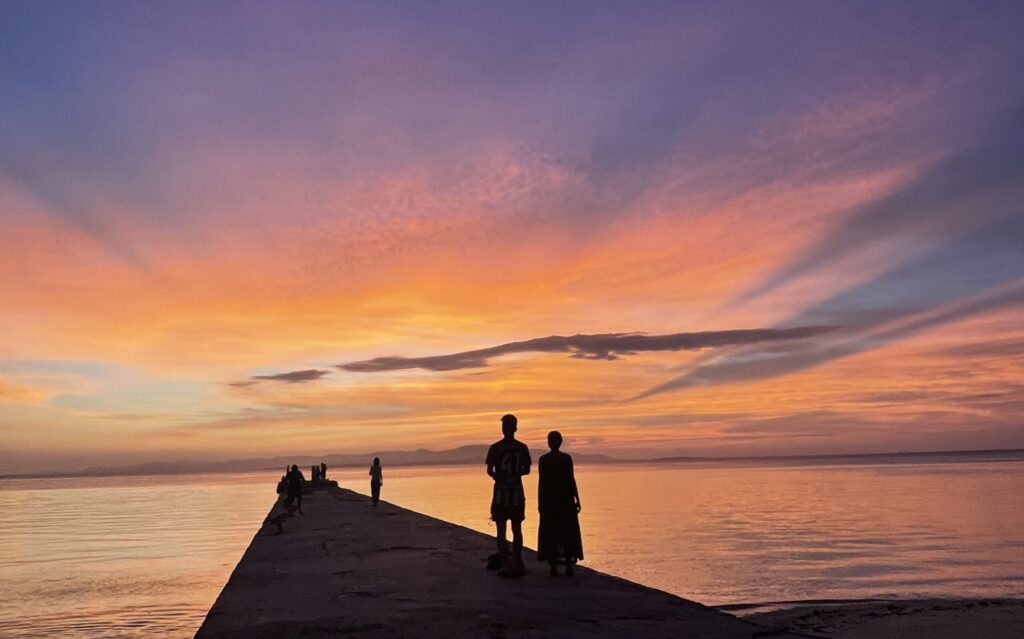
The West Pier is a famous spot on Taketomi Island for watching the sunset.
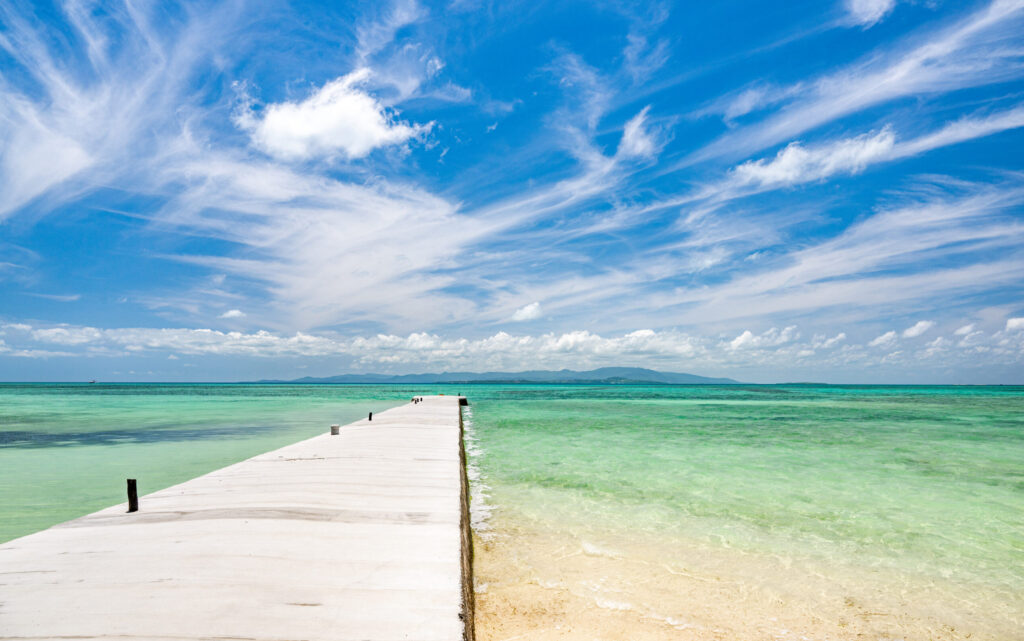
The sight of it stretching straight out into the emerald blue sea is a view you should definitely see if you visit Taketomi Island.
This article introduces ways to enjoy the West Pier, which changes its appearance with the passage of time, and the story of the "sabani," a wooden boat that has connected the island to the sea.
1. "Nishi-Sanbashi" (West Pier) is a famous spot for watching the sunset, representative of Taketomi Island.
The West Pier is a stone and concrete pier built in 1938, approximately 105 meters long. It was the first modern pier built on Taketomi Island and is now a nationally registered tangible cultural property.
The West Pier stretches straight out into the sea on the west side of Taketomi Island.
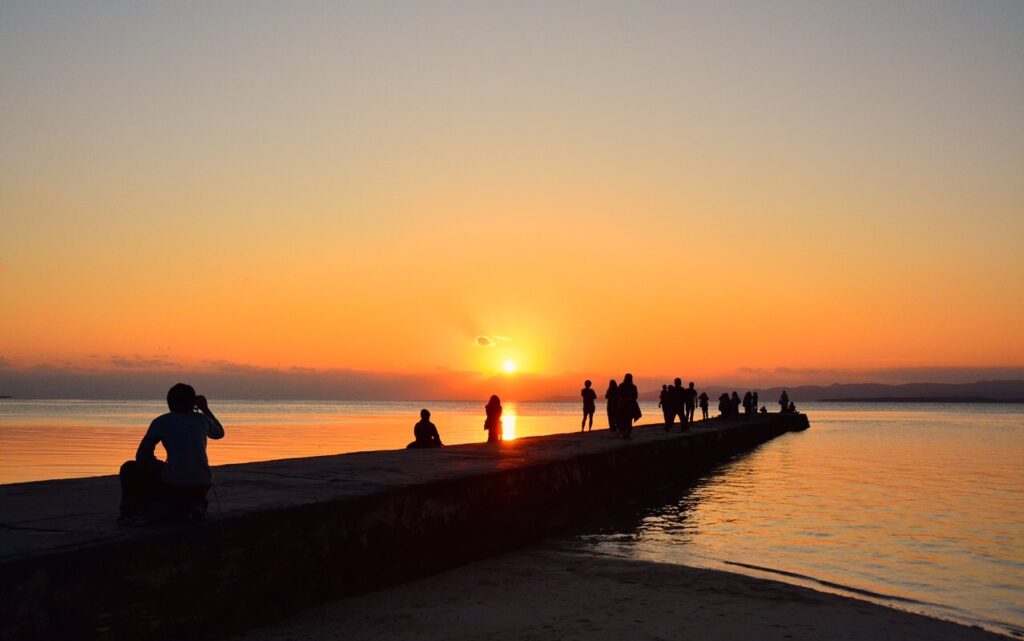
At dusk, the sight of the sea and sky gradually turning crimson as the sun sinks behind the silhouette of Iriomote Island is a quintessential scene at the West Pier.
As sunset approaches, many people gather, taking pictures, gazing at the sea, and enjoying the slowly changing colors of the sky.
2. The changing appearance of the West Pier throughout the morning, noon, and evening.
The view from the West Pier changes dramatically depending on the time of day you visit.
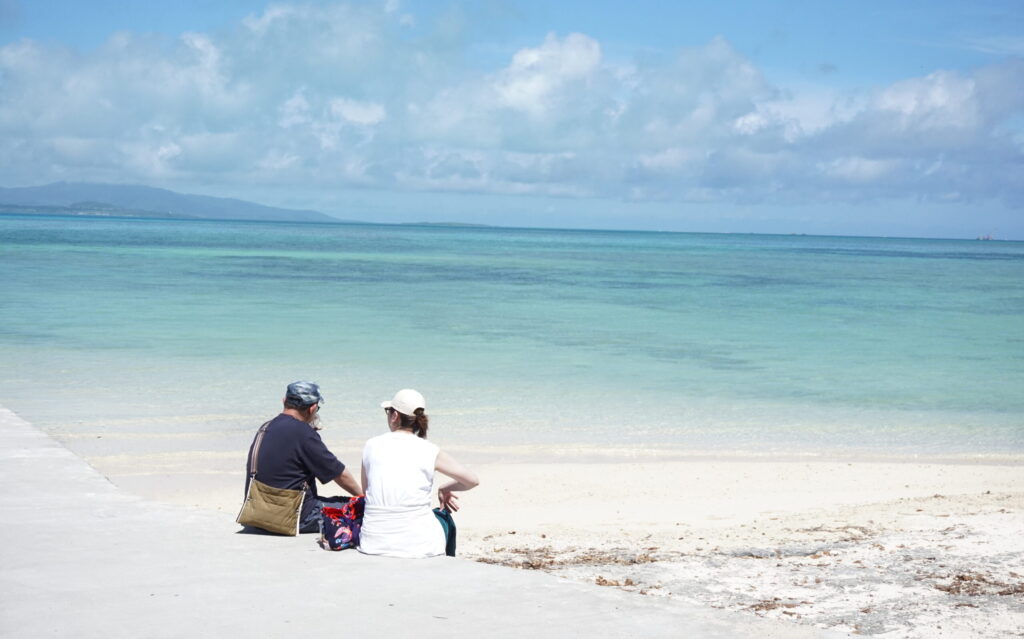
In the morning, there are still few visitors, allowing you to enjoy a refreshing and peaceful time while gazing at the calm sea.
During the daytime, the sun is high in the sky, making the sea exceptionally clear, and the contrast between the blue ocean and the white pier is at its most vibrant. If you look down into the sea from the pier, you may even spot schools of small fish or other creatures living in the shallows.
And as dusk falls, the sky and sea change to shades of orange and crimson.
Take your time to admire the sunset, not just the moment it hits you, but also the lingering atmosphere from when the sun begins to dip until it has completely set.
Even if you've visited before, going at a different time of day might reveal a different side of the West Pier.
3. Taketomi Island in a quiet state after the day-trippers have left.
After the last ferry back to Ishigaki Island departs, Taketomi Island gradually becomes quieter.
The West Pier, a popular spot for watching the sunset, takes on a different appearance at night compared to the daytime.
The only sounds you can hear are the wind and the waves.
On Taketomi Island, where there are few city lights, the darkness of the sky and the stillness of the sea feel all the more profound.
Watching the sunset from the West Pier and then staying overnight on the island to spend the night and the following morning is one way to enjoy Taketomi Island.
4. The starry sky under the new moon and the sea illuminated by the full moon.
The night view from the West Pier changes depending on the phases of the moon.
Around the time of the new moon, when there is less moonlight, the darkness of the night sky deepens even further, and if the weather is clear, you can see many stars.Shooting stars can often be seen here.
If the conditions are right, you might even encounter a landscape where the Milky Way stretches out over the sea.
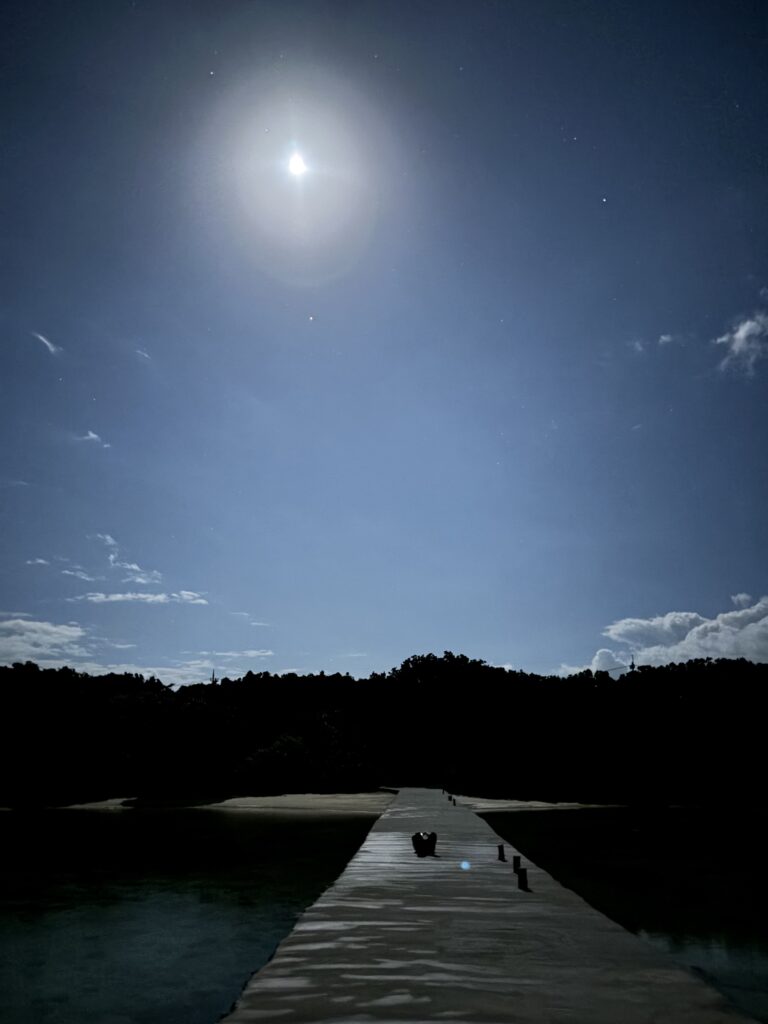
On the other hand, on nights with a full moon, the surface of the sea and the pier are softly illuminated by the moonlight.
The sea, which should be dark, appears surprisingly bright, and there are moments when the moonlight feels dazzling.The nights of the new moon, when you can enjoy the stars, and the nights of the full moon, when you are enveloped in moonlight, each have their own unique beauty.
Also, if you're lucky, you might spot a coconut crab around the west pier at night.You're not guaranteed to encounter them, but if you do, observe them quietly without chasing or touching them.
5. Points to note when visiting the West Pier at night
The area around the west pier is dark at night, making it difficult to see your footing. Since there are no railings on the pier, extra caution is needed compared to daytime. Be especially careful on windy or rainy days.
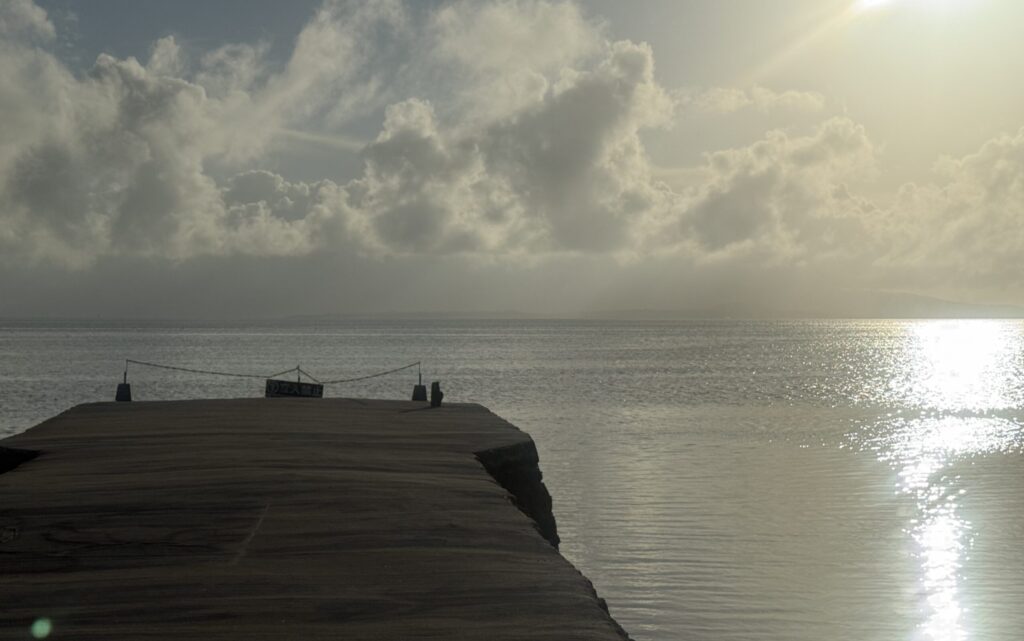
Also, the tip of the west pier is slippery and off-limits, so please follow the signs at the site. Bringing a light to illuminate your path will give you peace of mind.
Please be mindful of noise levels and flashing lights near settlements and accommodations, and enjoy your time quietly so as not to disturb the island's way of life.
6. The West Pier was once a port that supported the island's way of life.
Although the West Pier is now known as a famous spot for watching sunsets, it was not originally built for tourism.
Taketomi Island is an island formed by the uplift of coral reefs, and there is limited land suitable for growing crops. For this reason, the islanders in the past would cross the sea in wooden boats called "sabani" or "itafuni" to Iriomote Island to cultivate rice paddies.
The West Pier was used as a port for transporting rice and other goods harvested on Iriomote Island to Taketomi Island. Therefore, the tip of the pier was built with a ramp so that cargo could be unloaded even at low tide. *Reference:Agency for Cultural Affairs "Cultural Heritage Online"
Even in its current form, which is part of the beautiful landscape, the original role it played in the island's way of life at the time remains.
Beyond simply admiring the scenery, knowing why a long pier was built in this location can make the same landscape appear slightly different.
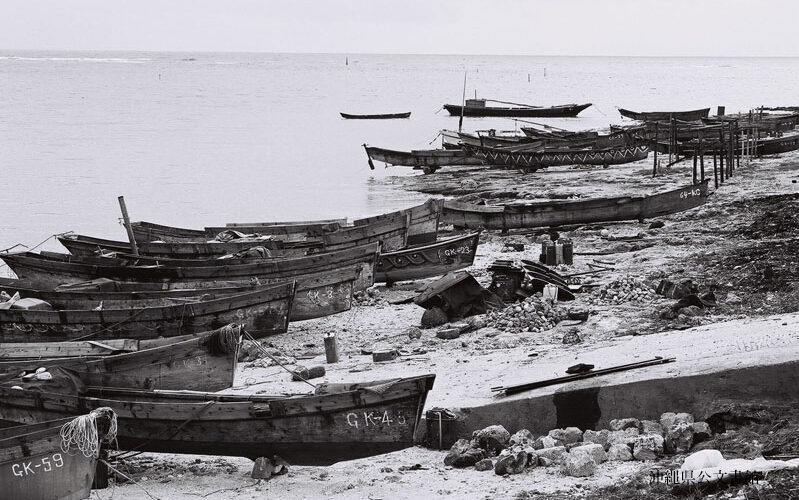
Photographed in October 1965_Collection of Okinawa Prefectural Archives
7. Taketomi Island and the Sea, Connected by Sabani Boats
Although no boats currently depart from the West Pier, gazing at the sea from the bridge allows one to imagine the vastness of the ocean that the islanders once traveled by boat, and to contemplate what life was like back then.
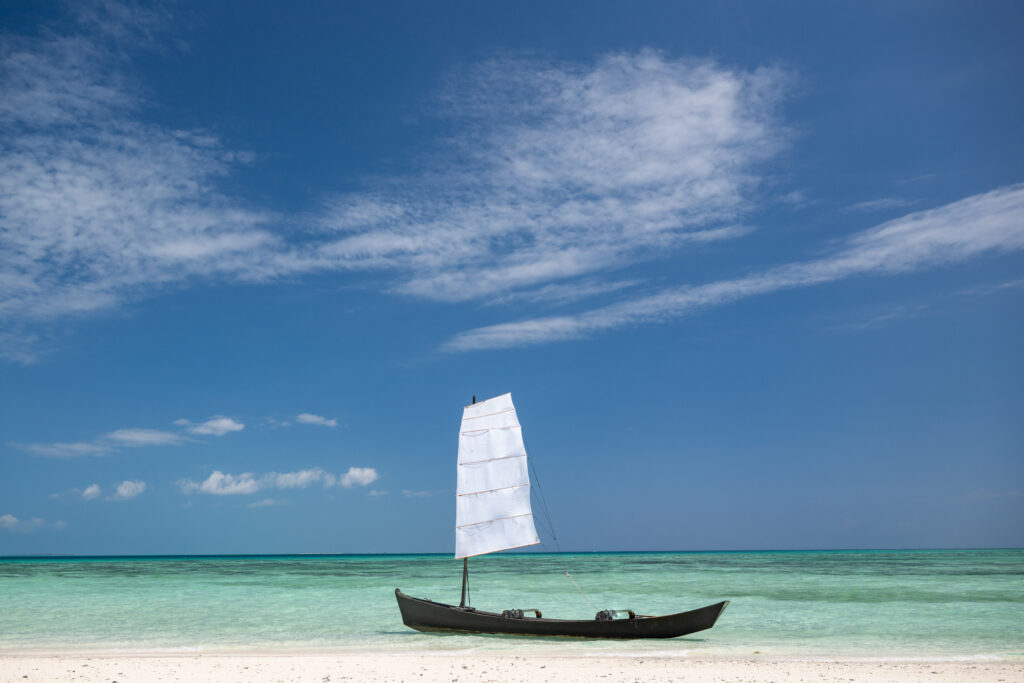
The West Pier and the traditional Okinawan boats (sabani) were indispensable to Taketomi Island, connecting islands, people, and their lives by transporting people and food.
To convey this history and charm to the present day, [Taketomi Island Sabani Tour Shu-kaji] is the only company on Taketomi Island that offers a sabani boating experience.
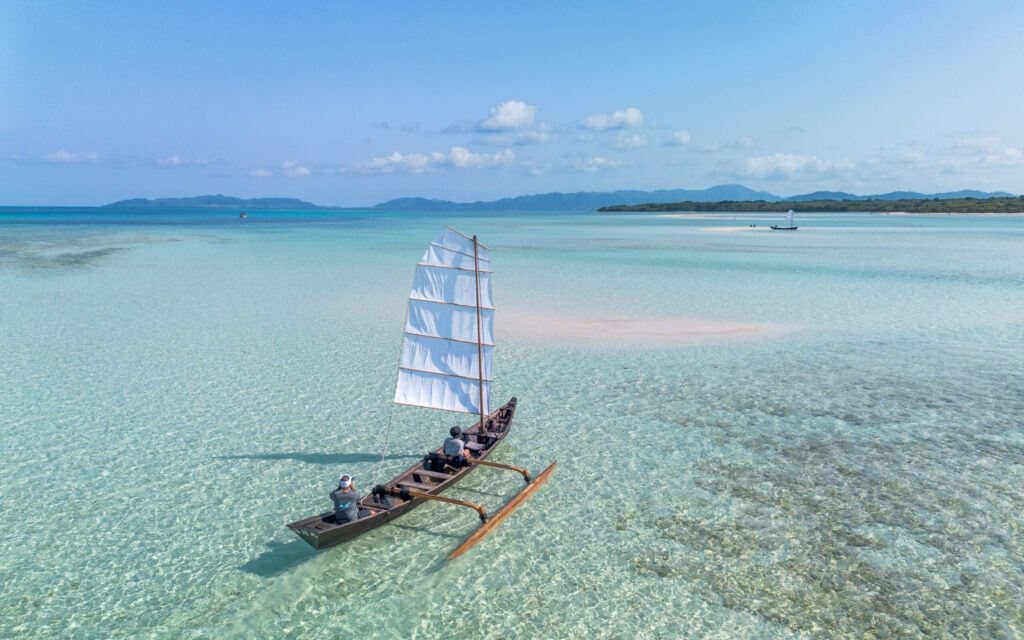
8. Experience the sea and history of Taketomi Island in a traditional Okinawan boat (sabani).
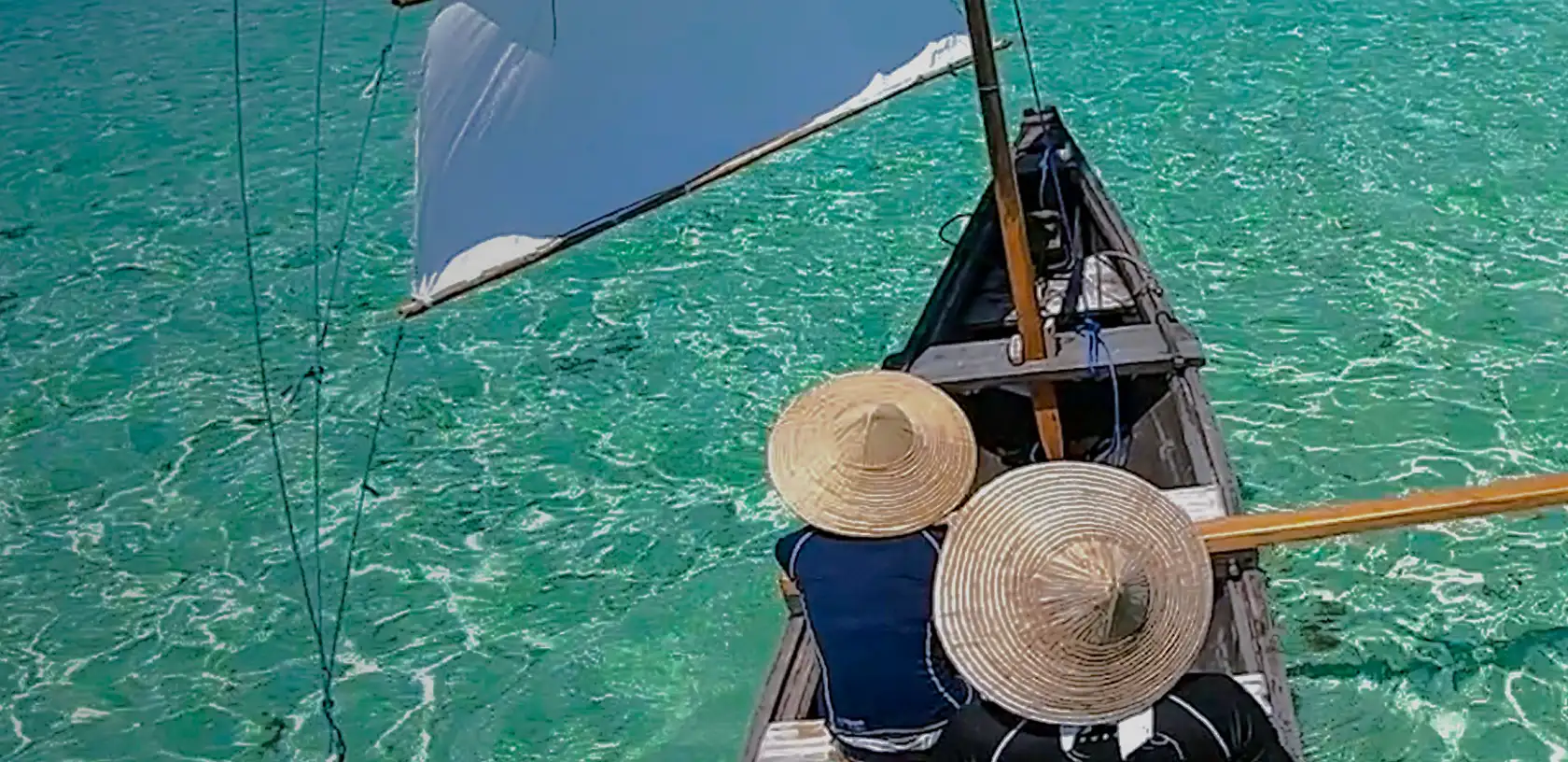
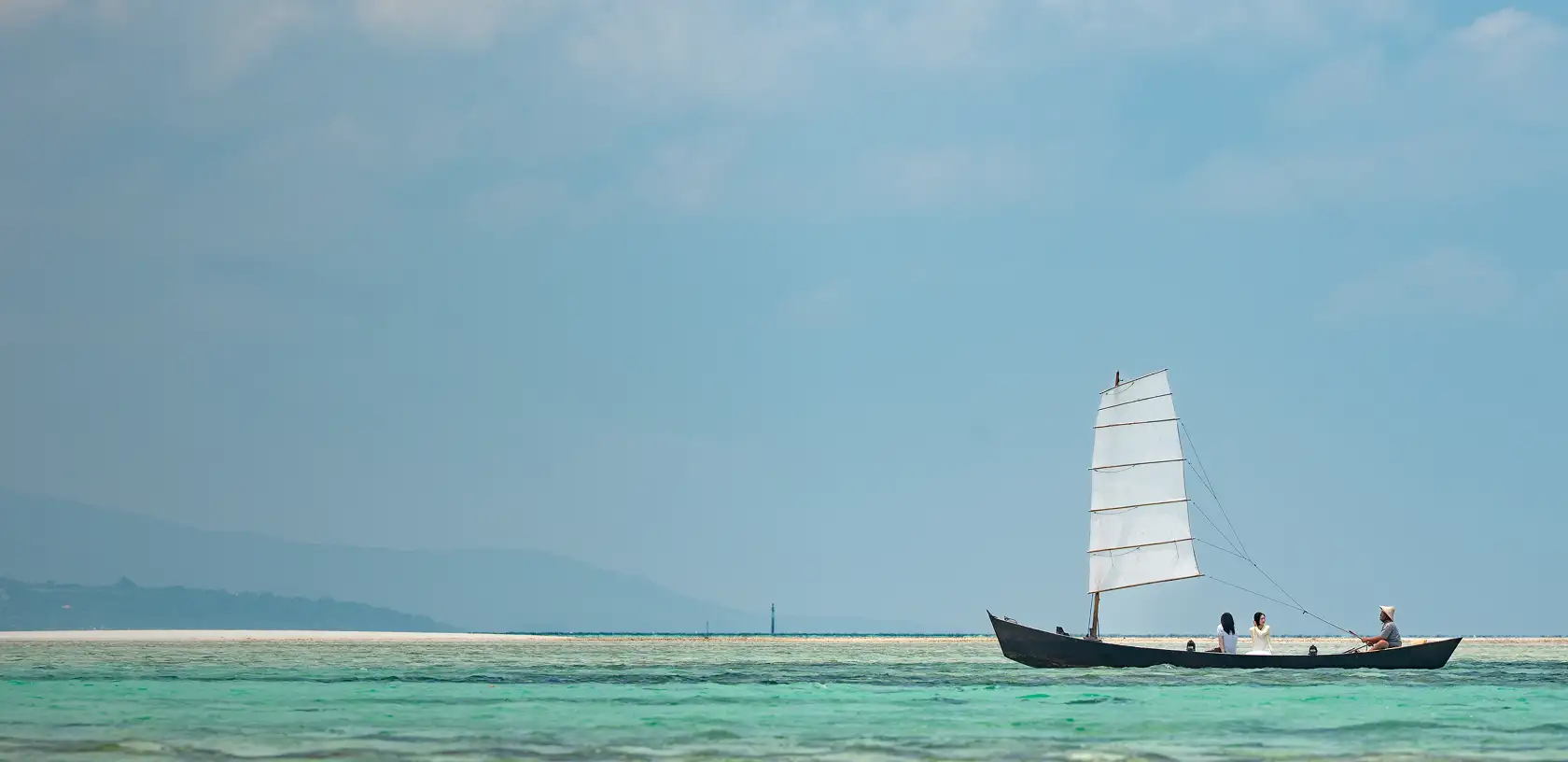
Shukaji's sabani tour allows you to experience the boat culture that once supported the lives of the islanders on Taketomi Island.
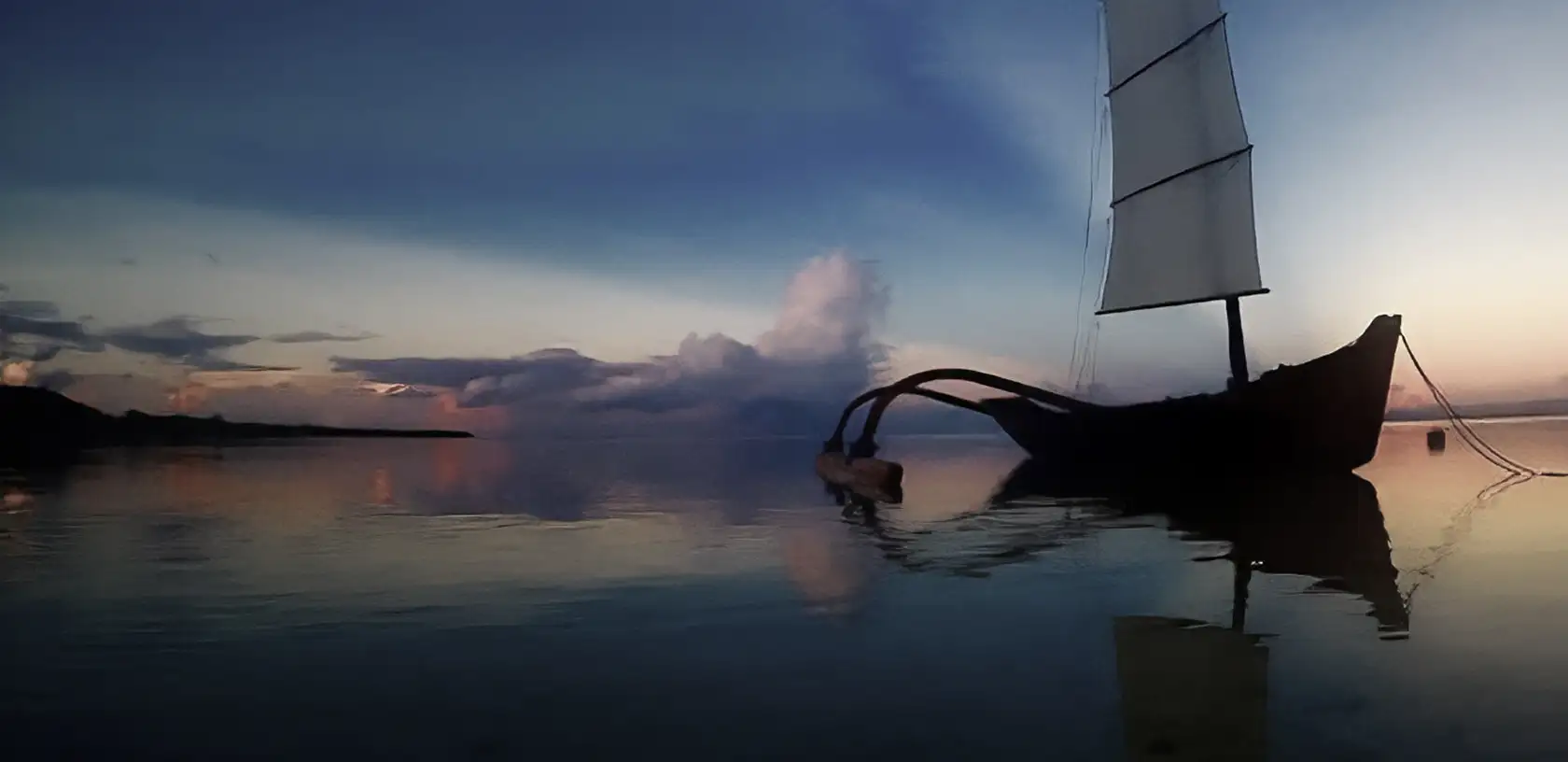
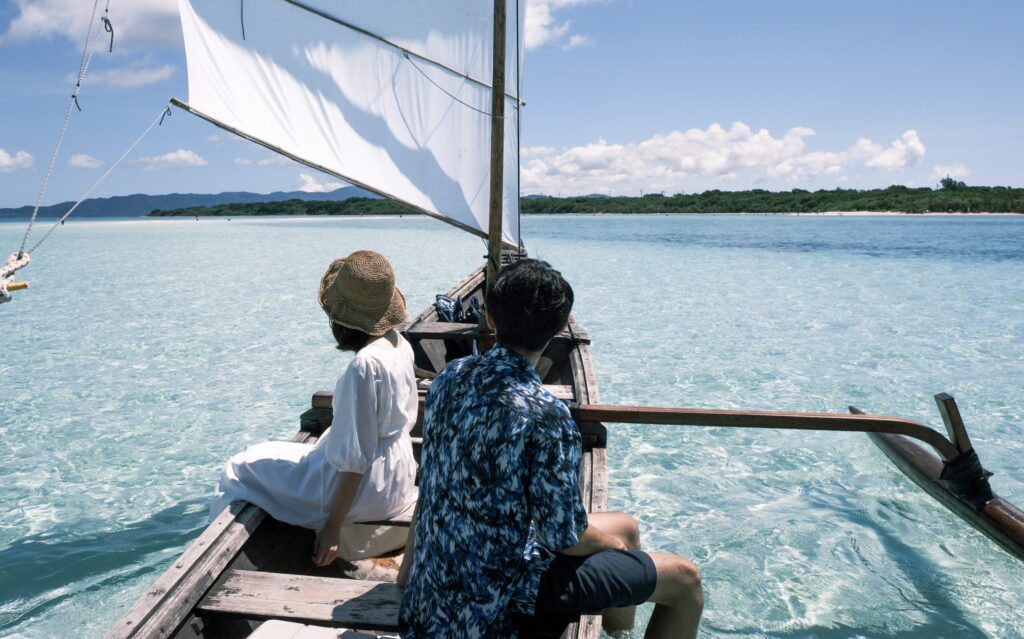
Aboard a traditional Okinawan boat without an engine, the sounds you hear are the rustling of the sails in the wind, the waves lapping against the hull, and the chirping of birds...Surrounded by the sounds of nature, you can experience the sea of Taketomi Island, the culture passed down on the island, and the feelings of our ancestors with all your senses.
Depending on the wind direction, tides, and weather, the location you sail and the scenery that unfolds before your eyes will be different each time.
Instead of going to see a predetermined view, let nature guide you and enjoy the sea that you encounter on that particular day.That's also part of the appeal of the Shukaji sabani experience.
The tour is exclusively for one group at a time, allowing you to spend quality time with your loved one.
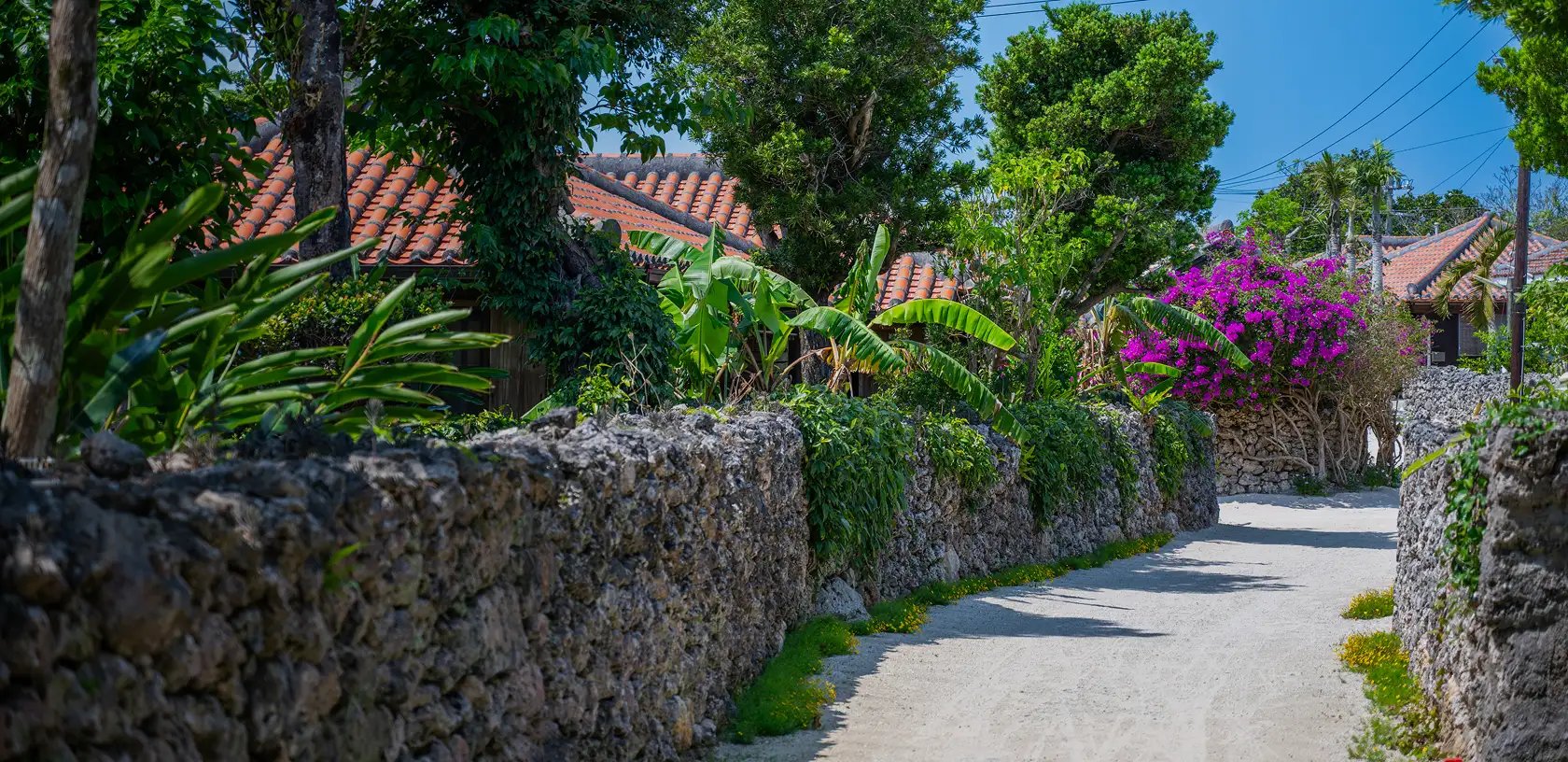
For those who want to learn about the island's history and way of life from the mainland, we also offer island walking tours.
Join a guide, born and raised on Taketomi Island, as you explore the island's scenery, including the West Pier, and learn about the island's culture and way of life.This is a time to experience not only the information found in guidebooks, but also the memories passed down on the island and the stories that only the islanders can tell.
We invite you on a memorable journey where you will discover aspects of Taketomi Island you never knew existed, through experiences both on land and at sea.